Monday, May 24, 2010

Using Social Media: Why Would You Not? -or- How I Taught Stevie Nicks How To Use Twitter

I find it remarkable when I am around professional people, especially people in the sales or business development realm, who do not use social media, and are even a bit hostile to the idea. It makes me ask, "What's really going on here?" I have conversations about this with a couple of associates/friends whose feelings tend to veer toward those of a Luddite, who feel infringed upon and, possibly, personally displaced. This is natural. We are still in that period when many are still processing how they define the parameters within which technology and media and modern culture, etc, may inhabit, within the greater context of their lives. I find that people rest all over the spectrum of possibilities, existentially.

For some, the extent of the interaction with social media is their daily check-up on FaceBook, including the games they happen to play. That's better than those who filled out a page on either FaceBook, Twitter, MySpace, YouTube, et al, and then never went back. I interact with the social media world to a far greater extent than most, particularly people of my age, and older. I get that. It's my job. But, it is also my passion. For others, not so much.

And yet, I wonder about the failure, by some, to get ahead of the curve and identify social media as a necessary component of professional life, a component that will become even more vital.

I made an observation when the internet was just starting out about how important it would be to become one who is "connected". To be unconnected would eventually amount to residing in a kind of third world. So now, not be plugged into social media, especially as a professional, comes across as an obstinate dismissal, as if to say, "I can't be bothered by all of that."

All the while, I'm thinking, "You're not being bothered is getting you passed by."

I guess I'll say this, as I used to say to my dad when he remarked that he did not like fried chicken, "Good! More for me."

I say all of this as someone who is among the converted. I used to pooh pooh FaceBook and Linked-In too, until I got into them. My business partner at Q7 Associates, The Right Rev. Dr. GK Rowe, experienced the same thing. Once I was into FaceBook, I kept urging him to do it, and he would condescendingly close his eyes and dismiss me, outright. "That was until I got into it, " he said, "then it was Balls to the Wall, total buy-in once I saw the possibilities."

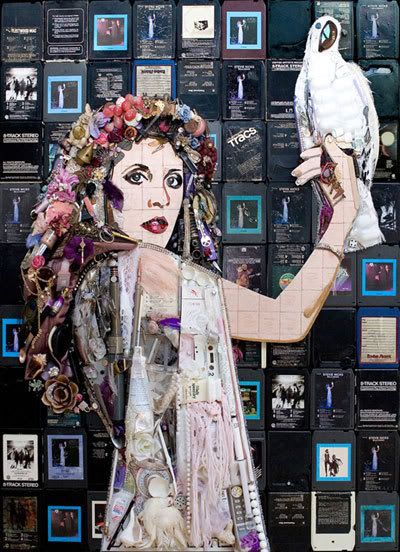
That's what I love, the endless, intriguing possibilities. Why, just the other day, I got to teach Stevie Nicks (@RealStevieNicks) how to use twitter. How many people get to say that?

Monday, May 17, 2010

Using Social Media: Remember - Great Content Never Goes Stale


That line about great content appears in an article from Canadian site, Financial Post, and I immediately latched on to it because it speaks to a fundamental truth about content on the net. Great content is timeless and endlessly useful.

But, many entrepreneurs, including the ones at an Ontario conference where a social media consultant was explaining how social media channels can help in the sphere of recruiting talent, are still skittish, fearing a lack of interpersonal interactions will turn potential clients off. Nay nay, the author reminds us:

"Recognizing that many business owners are still shy about Twitter and Facebook, he suggested they look at these new channels as a recruiting tool.

"Social media let you spark conversations with potential employees and promote your business as a great place to work. When you're satisfied with your results, he said, you can tackle more marketing-oriented conversations.

"I found that suggestion sensible, and sensitive to many entrepreneurs' doubts about social media. So I was shocked when some delegates denounced the consultant's proposal. They said people are the most important part of business, and expressed fears that social media will wipe out face-to-face relationships.

"The consultant adroitly responded that social media don't replace anything. Blogging, Web video, Twitter and Facebook help you build new relationships, by promoting and sustaining conversations with the growing numbers of customers who don't read your brochures or prefer interactive media."

The article, by Rick Spence, goes on to tell the story of how a Vancouver entrepreneur, Michael Jagger, founder and CEO of Provident Security, has gained expertise in using social media to advance his business and provide better service to his clients.

"Jagger uses all possible media to promote his company. So he's become an expert at public relations, public speaking, video, blogging and, most recently, Twitter.
He believes in integrated promotion. When asked to make a presentation on security, he has the presentation taped. Edited portions of the speech -- say, talking about new security technology -- may be uploaded to his website and his blog. Then he'll tweet about the videos on Twitter.

"A key advantage of social media is that content posted online may remain there forever -- and great content never goes stale.

"One day last week, Jagger tweeted about "Disabling a burglar alarm."
Clicking the accompanying link took you to Jagger's 2007 blogpost explaining how a clever thief in Kitsilano had broken into an office and disabled the burglar alarm before roving the office stealing computer parts.

Jagger proves you don't have to be a professional writer to maintain an intriguing blog; he just writes about what he knows, using an even, "just the facts" tone reminiscent of Dragnet."

Spence's closing thoughts should be embraced by all who want to move in the direction of Jagger, et al.

"Social media don't replace relationships or marketing practices that are working for you. Social media provide new channels for getting your message out.

"But before you can reap any of these benefits, you have to lower your natural defensive shields against new tools with silly names."


Image by Sylvar

Wednesday, May 12, 2010

Indianapolis Social Media Breakfast


I am attending the Indianapolis Social Media Breakfast in the morning. The subject of this breakfast, "Using Social Media in the Travel, Tourism and Attraction Industries", should be interesting. I'll be giving a full report tomorrow.

Sunday, April 25, 2010

Slideshow.com: Set Your Presentation Free

You can pretty much tell when something is under the radar when Wikipedia does not have an article on it. Nothing about social media site, Slideshow.com, was there when I searched the open source, public, cyber-encyclopedia.

Slideshow.com allows users to post their slide presentations on their platform, freeing them for all the world to see. The stand-out beneficial aspect of a site like this is that the goal of the democratization of knowledge and information is well served in the using of it.

Here is the stated raison d'etre of Slideshow.com:

"Slideshow.com is a safe secure online platform where Members can share and publish PowerPoint Presentations and Photo Galleries. Members can create a community where they can invite friends, family and colleagues to view and comment on their Presentations and Galleries. It's a perfect way to learn from others or just share your ideas."

The site is quite easy to use, no technical wizards needs (we still love you guys, though!).

I love the idea that an artist could potentially have a global gallery show via Slideshow.com. Artist, musician, front man for art-rock group, The Talking Heads, David Byrne, is famously producing PowerPoint art. He spoke of his process in a piece in Wired Magazine back in '03:

"Having never used the program before, I found it limiting, inflexible, and biased, like most software. On top of that, PowerPoint makes hilariously bad-looking visuals. But that's a small price to pay for ease and utility. We live in a world where convenience beats quality every time. It was, for my purposes, perfect.

"I began to see PowerPoint as a metaprogram, one that organizes and presents stuff created in other applications. Initially, I made presentations about presentations; they were almost completely without content. The content, I learned, was in the medium itself. I discovered that I could attach my photographs, short videos, scanned images, and music. What's more, the application can be made to run by itself -no one even needs to be at the podium. How fantastic!

"Although I began by making fun of the medium, I soon realized I could actually create things that were beautiful. I could bend the program to my own whim and use it as an artistic agent. The pieces became like short films: Some were sweet, some were scary, and some were mysterioso. I discovered that even without text, I could make works that were "about" something, something beyond themselves, and that they could even have emotional resonance. What had I stumbled upon? Surely some techie or computer artist was already using this dumb program as an artistic medium. I couldn't really have this territory all to myself -or could I?"


Saturday, April 17, 2010

The Social Media Transformation


From just fun and games to business necessity, the world of social media has undergone a transformation. Actually, it's more of a maturation. A piece in Chicago's The Business Ledger , written by associate editor Sherri Dauskurdas, delves into this phenomenon.

_______________________

Social media a commerce-driven necessity

Navigating the maze of social media platforms can be a challenging, if not daunting task, but as the Facebook revolution takes hold in our country, more and more businesses are finding participation online is not simply a benefit, but rather a necessity to survival.

Experts and business professionals met March 25 at NIU-Naperville, to discuss social media and its implications for use in commerce as part of the 2010 Business Ledger Newsmakers’ forum series.

“Social media is not about technology and tools, it’s really about people,” said Barbara Rozgonyi, principal at CoryWest Media, LLC. “You can use Twitter to listen, you can search, respond to people for customer service. If people have a problem you can get to it right away. You can ask questions and connect with people, and you can also spy on your competition.”

If that still sounds overwhelming, don’t despair. Brian Tomkins, chief information officer for Boom Media, Inc., is seeing older adults taking the reigns on social media sites these days.

“The average age on Facebook is now 38 and the average age on Twitter is now 37, and it’s moving up,” said Tomkins. “You are seeing the demographic get older. It’s not for kids.”

That is allowing for a sea change in social media, from the social and entertainment focus under which it began to a developed exchange of information and a more valuable asset to marketing than ever before.

“It really comes down to using all the tools available to not replace traditional techniques but to supplement those,” Tomkins said. “We’re not replacing anything; we’re just enhancing them.”

It’s a simple transformation to understand. Traditional medium – television, radio and newspapers – are one-way tools, while social media is interactive. It allows participants to engage, said Brett Flickinger, creative revenue expert for Next Level.

“The power of social media is that so many people are allowed to participate in it,” said Flickinger. “With social media, we’re changing the rules as to how we as businesses communicate with existing customers, stakeholders and potential customers.”

In fact, Flickinger added, about 1.7 billion people were on the Internet last year, and 72 percent of America was online. That’s a lot of potential customers, and major companies are responding to that captive audience.

“Fortune 100 companies are now taking on kids right out of school at $30,000 a year to sit at a cubicle all day and tweet,” said J.D. Gershbein, president of Owlish Communications. “So we have arrived, and if companies aren’t in social media by now, they’re not only missing the boat, but they didn’t even know the boat was there in the first place.”

Tomkins added that 79 percent of Fortune 100 companies are on Twitter, and there are 50 million Tweets per day.

“So a lot of companies are spending money on this,” Flickinger said. “Some of these are probably your competitors. Think about that.

“Studies have shown, time after time, people don’t trust advertising. They don’t trust the message,” he said. “But they do trust the words of their peers. That’s the strength of social media. Peer recommendations are a driving force to get business.”

Yet even the major brands can only facilitate a portion of the discussion.

“Over 75 percent of what’s on the Internet was not produced by them,” said Tomkins. “It was produced by people talking about them. So if you’re not online, 100 percent of the content about you and your company is produced by somebody else. Do you really want to put that power in their hands?”

Instead, the experts suggest, companies should use social media to create positive brand association, enhance brand awareness, influence search results, support business development activities and enhance intent to sell. All these things can retain customers and shorten the sales cycle, as well as increase a company’s value.

“Your social media presence, those online tools you use, those are online assets. No matter what you do, no matter where you go, that’s real estate that stays with you,” Tomkins said.

Businesses must move quickly and understand social media and how it works, which is much different than other media. Online, it’s all about credibility, Tomkins said. You have to be credible online, back up what you say and be engaging.
Wednesday, April 14, 2010

YouTube Redesign In Line With Google's Focus On Users


I am an avid YouTube viewer, as are millions of others worldwide. A short while back I was taken aback by YouTube's new look, which I initially thought was a glitch. Silly Me. On Youtube's redesign, as Laurie Sullivan writes, in a piece for Online Media Daily, "The cleaner, stripped-down version, which comes after a year of planning, more closely resembles the style and design of pages from parent company Google."

Here's more from the article:

"The changes might seem subtle at first, but that's only because the site sports a cleaner look. Metrics from preliminary tests that YouTube ran earlier this year suggest that overall video playbacks with the redesign rose 6%. People stay on the site 7% longer to view and comment longer. The cleaner design also helps pages load faster.

The combined features should give YouTube fodder to attract advertisers who long to engage site visitors more than the average of 15 minutes per session.

That's the length of time people typically hung around and viewed videos, perhaps because the old page design became crowded. Features began competing against each other for the attention of the site visitor, explains Shiva Rajaraman, YouTube senior product manager.

Rajaraman believes the redesign will change that, turning novices into power users though a variety of powerful, yet simple features and functions. For example, the search box has been positioned at the top center of the page. Site visitors can conduct searches as they watch videos."


This is a perfect example of experience-based design. Google is a forwarding thinking company from the design aspect and they are completely engaged in enhancing the user experience as it applies experienced-based design principles to the functionality of all its various business models.

Now as for YouTubers (those who provide content), one of the absolute best is Charlieissocoollike. I give you Charlie:

Monday, April 12, 2010

The Ongoing Conversation

There is a great deal of talking "at" in our culture today rather that talking "with". Here at Round Table Talking, we will endeavor to have a conversation with our readers about modern culture and the interplay between the worlds of art, design, and technology how they manifest themselves in our lives.

We hope to have a lively and informative exchange and encourage participation in the proceeding comment forums.

Let the conversation commence.